Listed tier S · Mythic · 0.72%
Nightborne
Sustain engine that never stops healing
- Solo runs
- Boss sustain
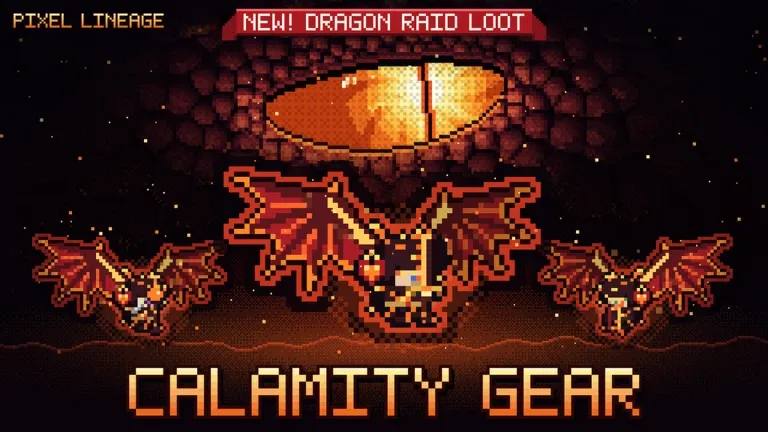
Independent player reference
Pixel Lineage is a Roblox Turn-Based RPG by Pixel Lineage. This Pixel Lineage wiki tracks the codes that still redeem, the published race and class rankings, the forge ladder and every documented dungeon mechanic, so you can decide what to keep, where to go and what to spend next.
Page updated · Editor: Raymond
Codes →Roblox listing snapshot recorded · not live data; servers hold 50 players
Work out what is actually blocking you first. A run you lost to a missed prompt needs practice, not better gear; a run you lost to a depleted Energy bar needs a different build; and a reroll you regret needs a budget you did not set. Each section below is an aggregate entry point with a dated reference behind it.
A Pixel Lineage code only works if you have joined the official Roblox community group first — the Goblin Merchant in town rejects every string until that step is done. The code list on this Pixel Lineage wiki records what each one grants before you redeem it: Race Spins and Candy are spent in completely different places.
Data dated · Sources and scope
| Code | Reward | Copy |
|---|---|---|
| SAKURA | 10 Race Spins, 10 Talent Spins, 1 Life and 1 Renewal Crystal | |
| 0y0 | 10 Race Spins, 10 Talent Spins and 1 Life | |
| COMMUNITY! | 5 Race Spins, 5 Talent Spins and 1 Life | |
| TORMENT | 1,000 Gold, 100 Knowledge, 3 Potions, 8 Race Spins and 8 Talent Spins |
Hitting the average number of attempts is not the same as being likely to succeed. The Pixel Lineage calculator models each spin as an independent roll at the published rate, then shows the chance of walking away empty-handed before you spend anything.
Data dated · Sources and scope
Nightborne is listed at 0.72%. Across 50 independent spins there is a 30.3% chance of seeing at least one, which still leaves a 69.7% chance of seeing none.
1 − (1 − 0.0072)50 = 30.3%
The modelled pool is the 13 rollable races, whose published chances sum to 100.00%%. Event-only races such as Dullahan are excluded because they are bought with event currency instead of rolled. No pity counter is documented, so every spin is an independent roll.
| Target race | Chance per spin | Spins for a 50% chance | Spins for a 90% chance |
|---|---|---|---|
| Nightborne | 0.72% | ||
| Nightborne | 0.72% | ||
| Celestine | 1.45% | ||
| Human | 37.68% |
The tier list on this Pixel Lineage wiki puts the rollable races on one board and the six classes on another, because the Race Evolution update changed the reasoning: a Rare or Uncommon race with a strong evolution can now compete with a Mythic that has no build around it.
Data dated · Sources and scope
Listed tier S · Mythic · 0.72%
Sustain engine that never stops healing
Listed tier S · Mythic · 1.45%
Flat crit, dodge and magic in one package
Listed tier S · Rare · 5.8%
Rare-tier magic burst that punches above its rarity
| Class | Tier | Difficulty | Weapon family |
|---|---|---|---|
| Warrior | S | Easy | |
| Archer | S | Easy | |
| Fist | A | Hard |
Start with the action you cannot skip: join the community group, because codes stay locked until you do. Then learn how a run ends, pick a class you can actually control, and only afterwards start planning rerolls and forging.
Join the group, redeem the newest codes, and understand the three-Life rule before you enter your first dungeon.
Read the guide →Turn order, Energy, quick-time event prompts and the Return Home exit — the four things that decide whether a run survives.
Read the guide →A stage-by-stage plan for the opening session, including what not to spend and when rerolling is still a waste.
Read the guide →A drop rate tells you how hard a race is to roll; its racial ability tells you whether it fits your build. Human is the default roll at over a third of the pool, while the Mythic races share less than a percent each — so the reroll decision is usually about the ability, not the rarity label.
Data dated · Sources and scope
| Race | Rarity | Published rate | Racial ability |
|---|---|---|---|
| Nightborne | Mythic | 0.72% | |
| Celestine | Mythic | 1.45% | |
| Vesper | Rare | 5.8% | |
| Seraph | Mythic | 0.72% |
The 13 rollable races on this site add up to exactly 100.00%%, so no race is missing from the pool. The published lists were cross-checked against one another rather than taken from a single tracker.
Dullahan is the exception: it is Mythic and sits in the A tier, but it is bought from the event stall rather than rolled, so it never appears in reroll odds.
Pixel Lineage gives you six classes, and the choice is not reversible in place — changing class means resetting, so it is worth reading before your first serious save. On this Pixel Lineage wiki, Warrior and Archer are rated the easiest to learn, while Thief is ranked lowest for progression rather than for damage.
Data dated · Sources and scope
| Class | Tier | Difficulty | Weapon family |
|---|---|---|---|
| Warrior | S | Easy | |
| Archer | S | Easy | |
| Fist | A | Hard | |
| Mage | B | Medium | |
| Bard | C | Hard | |
| Thief | D | Medium |
Past the six base classes there are two upgrades: the Super Class, chosen at a shrine and adding extra moves, and the Ultra Class, which needs Sigils from Act 5 and later plus Tomes for some skills.
A reset is not a total loss — Materials, Race, Traits carry over to the new character. Everything else is rebuilt from scratch, which is exactly why the first class choice deserves more than a coin flip.
Talent Spins reroll the talent your character rolled, and they are a separate pool from Race Spins — a code that hands out race spins does not hand out talent spins. No complete talent table with per-pick values is published, so the useful question is which direction you are building toward.
Data dated · Sources and scope
Talent picks that shorten the number of turns a fight takes.
Players whose runs are slow rather than dangerous.
Talent picks that stop a bad turn from costing a Life.
Players losing characters rather than losing time.
Talent picks that improve Gold, loot and Knowledge income across runs.
Players building toward Act 5 and the Ultra Class grind.
Pixel Lineage is turn-based, but you still act every turn: attacks and dodges resolve through quick-time event prompts, so a fight is decided by whether you hit the prompt rather than by a passive roll. Energy pays for skills, and a Life is the one cost you cannot earn back through grinding.
Data dated · Sources and scope
Pick Solo or Multiplayer and choose Normal, Hard or Nightmare before you leave the town. Difficulty changes both the risk and the quality of drops.
Combat is turn-based but you still act: attacks and dodges resolve through quick-time event prompts, so the fight is decided by whether you hit the prompt rather than by a passive roll.
Skills cost Energy and then go on cooldown. Dullahan's Headless Ride is documented as 4 energy with a 5-turn cooldown, which is the clearest example of the cost notation.
Enemies drop equipment at Rare, Epic and Legendary levels and bosses drop better. Materials feed the Blacksmith and the Auction House.
Return Home in the bottom-left corner exits the run and keeps the character. Walking out is cheaper than losing a Life to a fight you cannot win.
You start with 3 Lives. Dying costs one and sends you back to town; losing them all wipes the character and you restart from the beginning.
Enemies drop equipment at Rare, Epic and Legendary levels, and bosses drop better. Those materials feed the Blacksmith and the Auction House.
Return Home in the bottom-left corner exits a run and keeps the character. Walking out is cheaper than losing a Life to a fight you cannot win.
Pick the difficulty before you leave town, because it changes both the risk and the quality of the drops. The town is not decoration either: the Inn, Blacksmith, Auction House and Ancient Portal each answer a different problem between runs, and the Goblin Merchant is the only place that accepts codes.
Data dated · Sources and scope
First characters and unfamiliar classes
The first area is manageable and is the right place to learn the attack and dodge prompts. Drops are the weakest of the three settings.
Characters with a working build and spare Lives
Raises the risk and improves dropped gear, while remaining one of the two documented sources of race evolution artefacts.
Finished builds farming specific drops
The highest listed difficulty. Listed alongside Hard as a source of evolution artefacts.
| Facility | What it is for | Priority |
|---|---|---|
| Inn | Storage | |
| Ranch | Pets | |
| Auction House | Player trading | |
| Blacksmith | Forging and upgrades |
Run types recorded for Pixel Lineage: Solo run · Multiplayer run · Acts · Raid Gate · Secret bosses. Solo and multiplayer are both documented, so the difficulty you pick is a separate decision from the party size.
Codes are entered at the Goblin Merchant, and only after you have joined the community group — see the Pixel Lineage codes page for the current list and the exact redemption steps.
Forge along your class line rather than chasing the highest tier: each class draws on its own weapon family, and the top-tier weapon for a class you do not play is worth nothing to your save. This Pixel Lineage wiki documents four forge tiers, with Gold and material costs rising sharply at each step.
Data dated · Sources and scope
| Weapon family | Top-tier pick | Role |
|---|---|---|
| Warrior | Dragonfang Cleaver | Tier 4 Warrior weapon |
| Thief | Emberclaw | Tier 4 Thief weapon |
| Mage | Phoenix Rod | Tier 4 Mage weapon |
| Fist | Jade Dragon Wraps | Tier 3 Fist weapon |
| Bard | Sunburst Lute | Tier 3 Bard instrument |
| Archer | Emberwing Bow | Tier 4 Archer bow |
| Forge tier | Gold | Materials |
|---|---|---|
| Tier 1 | 120 | 2x Salvaged Metal · 1x Moss Wolf Pelt |
| Tier 2 | 400 | 3x Bone Fragments · 1x Cursed Essence |
| Tier 3 | 900 | 3x Wisp Dust · 2x Runed Stone Shards · 1x Cursed Essence |
| Tier 4 | 1,800 | 4x Living Cinder · 3x Runed Stone Shards · 2x Cursed Essence |
The clearest difference is the structure of combat. Pixel Lineage resolves fights turn by turn with quick-time event prompts, while Blox Fruits and King Legacy are real-time action games with competitive PvP. Genre labels below come from each game's Roblox listing; the advice is this site's editorial judgement.
Data dated · Sources and scope
| Game | Listing genre | Combat | Party / PvP |
|---|---|---|---|
| Pixel Lineage | Turn-Based RPG | ||
| Blox Fruits | RPG / Action RPG | ||
| King Legacy | RPG / Action RPG | ||
| Anime Adventures | Strategy / Tower Defence |
The dates below come from dated sources, and they answer two different questions: when the Roblox listing changed, and when a code wave was released. A listing update date is not automatically the day the content went live, so this Pixel Lineage wiki treats them as separate facts.
Data dated · Sources and scope
Dungeons + Halloween + Race Evo ·
Code release ·
Running since . Candy is the seasonal currency and is spent at the Candy Witch's stall, where Dullahan costs 10,000 Candy. The OCTOBER and SAKURA codes award Candy. These rewards are not part of the permanent progression route, and no end date has been published by the sources checked here.
Event currency: Candy
References for this page are listed below with their scope. Community rankings and estimates are not developer announcements; check the relevant source before relying on a value that may have changed.
Reference review date .
Editorial method and limitations · Report an error on this page
Pixel Lineage Wiki is a fan-made reference, unaffiliated with Roblox or the game developer. Rankings are editorial judgments; tool results depend on their inputs and assumptions, and published drop rates can change after a patch. Where the sources disagree, the disagreement is left visible instead of being averaged away. Read the editorial method and limitations · Send a correction.